Five West Bank villages burned in one night, sparking calls for 'Jewish terror' label
Opposition leaders demand emergency hearings as ministers debate whether the weekend arson attacks signal a new uprising.
By Vanessa Brooks ·
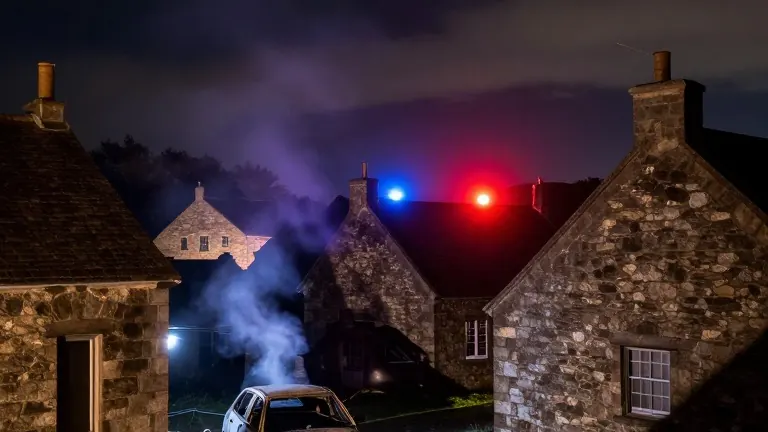
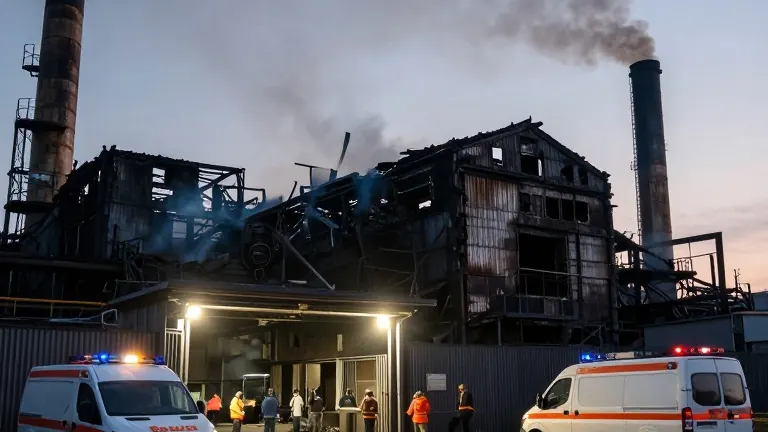
Palestinian villages in Judea and Samaria were the site of five overnight arson attacks this weekend, a surge in violence that has triggered a sharp political split within the Israeli government. The attacks, which targeted vehicles and homes, left residents of at least five communities without power and forced many to sleep in shelters.
Gadi Eisenkot, chairman of the Yashar party, issued a blunt assessment on Sunday, labeling the events 'Jewish terrorism in every sense of the word.' Eisenkot, a former chief of staff of the Israel Defense Forces, argued that the chaos must be addressed by name to restore stability.
Eisenkot directed his criticism at National Security Minister Itamar Ben-Gvir and Finance Minister Bezalel Smotrich. He accused the two ministers of allowing the territory to slide toward anarchy through their specific policy choices. 'Acts of sabotage by extremist groups setting vehicles and homes on fire undermine regional stability, endanger human lives, and severely damage the national security of the State of Israel and its foreign relations,' he stated.
Ben-Gvir pushed back against the characterization, suggesting the criticism was a calculated political move. He claimed Eisenkot was trying to secure support from Arab political parties for a future coalition. 'Eisenkot has no idea about the facts or the investigation, yet he rushes to declare it Jewish terrorism, demands administrative detention, and wants to throw them into the Shin Bet's basements,' Ben-Gvir said.
The former minister added that the accusations were an 'advance payment' toward a potential future government formed with the help of groups he described as supporters of terrorism. He emphasized that the government was conducting a full investigation into the incidents.
Yair Golan, a retired major general and chairman of the Democrats party, warned that the West Bank is on the brink of a third intifada. Golan argued that the current leadership is failing to protect the state's security interests. 'Judea and Samaria are on the brink of an explosion. Anyone who wants to prevent a third intifada must replace the current government, which gives a tailwind to Jewish terrorism and abandons security,' he said.
Golan noted that the actions of extremists were harming both Palestinian civilians and IDF soldiers. He warned that these actions were bringing Israel to a state of international isolation, a position he described as increasingly difficult to sustain.
In the Knesset, MK Yaya Fink called for an emergency hearing before the Foreign Affairs and Defense Committee. Fink placed political responsibility on Prime Minister Benjamin Netanyahu, Ben-Gvir, and Smotrich. 'The voice is the voice of Netanyahu, Ben-Gvir, and Smotrich, but the hands are the hands of Jewish terrorists,' Fink said, invoking a biblical reference to the relationship between Jacob and Esau.
Yousef Jabareen, chairman of the Joint List, described the violence as a direct result of government policy. He argued that the attacks do not happen in a vacuum but are a product of a deepening occupation where violence against Palestinians has become routine. Jabareen identified the Otzma Yehudit and Religious Zionist Parties as the political entities responsible, calling the attackers their 'military wing.'
Yair Lapid, leader of Yesh Atid, cited 'criminal negligence' by the government as the root cause. He stated that ministers' silence was deliberately encouraging what he called pogroms. 'When we form a government, we will tackle this terrorism and restore governance, law, and order,' Lapid said. Yoav Segalovitz, an MK for Ra'am, echoed the sentiment in a social media post, stating that the arson and violence were unacceptable acts that endangered lives.