135 Medics Killed as Lebanese Villagers Return to Burned Homes
The Kadouh family in Zawtar al-Gharbiyeh found their house occupied by Israeli soldiers and set on fire before the Lebanese army took over the area.
By Vanessa Brooks ·
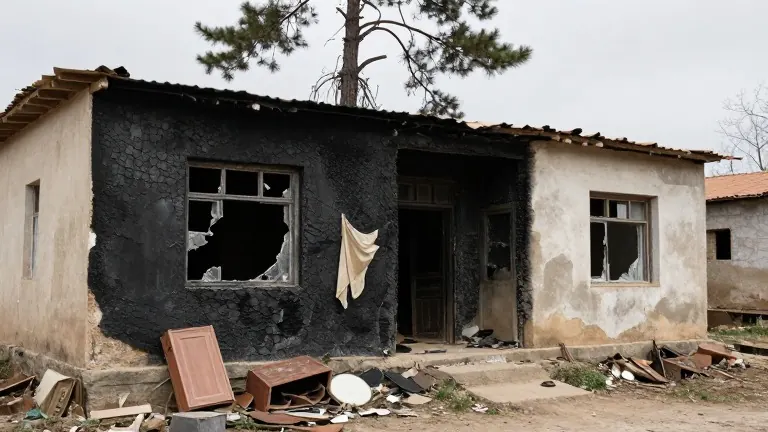
The Kadouh family returned to their home in Zawtar al-Gharbiyeh, Lebanon, in July to find it occupied by Israeli soldiers and then set on fire. The village became the first test of a U.S.-brokered plan for Israeli forces to withdraw and the Lebanese army to assume control. The Kadouhs had lived in the house for 40 years after Atef Kadouh saved money from two decades of work in Saudi Arabia.
The family lost one of their five children during the conflict. Adel Kadouh, 27, volunteered as an ambulance driver when the war began in 2026. He was a sports teacher and basketball champion planning to pursue a doctorate in France. Israeli drones killed him and four other medics on March 28 while they buried a 75-year-old man who had died in a hospital.
Atef Kadouh said he warned his son that Israel might not trust medical personnel. "He would not listen to me. He said, 'Dad there are wounded children, we have to go rescue them,'" Kadouh said. The Israeli military stated that militants often pose as paramedics to transport weapons for Hezbollah. The military did not respond to questions noting the five were killed at a burial site rather than in an ambulance.
Lebanon’s Health Ministry reported that Israel has killed more than 135 first responders and medical staff in the past two years. When the Kadouhs inspected their property, they found bullet holes in the refrigerator, freezer, and washing machine. Furniture had been pushed over the second-floor balcony and smashed on the ground below. Blue marker writing in Hebrew listed the first names of soldiers on the upstairs hallway wall.
Blackened food packets, including fruit boxes and energy drinks with Hebrew labels, lay on the kitchen floor alongside rotting sandwiches. Soot dripped from the ceiling in the bedroom of the family’s 18-month-old grandson. Yaghi found a spent missile propulsion unit with English markings reading "tactical" in one of the rooms. The Israeli military destroyed the home’s solar panels, leaving the house without electricity or running water.
The Lebanese army told the family that many houses in the village had been rigged with explosives before the army’s reentry. The army dismantled explosives left in the Kadouh home and others. Kadouh noted that the Israeli army used a bulldozer to uproot pine trees that produced the family’s pine nuts. The army also demolished the garage and destroyed the tractor.
Kadouh said the Lebanese state did not check on the family after the destruction. "No electricity, no water," he said. He noted that his son serves in the Lebanese army but that the force has been underequipped to avoid threatening Israel. "This army has a rifle, Israel has an F-35," Kadouh said. Yaghi pointed to blooming rose bushes and said the land remains central to their lives.
Smoke rises from a nearby village where Israeli attacks continue despite the ceasefire. Kadouh said he does not expect peace in his lifetime or with Prime Minister Benjamin Netanyahu. "Netanyahu is the one who killed my son. Let him bring back my son," Kadouh said. The family now lives in a house with no utilities, surrounded by the debris of their previous life.
More News · New Orleans news · Report a business · Got a Story?